
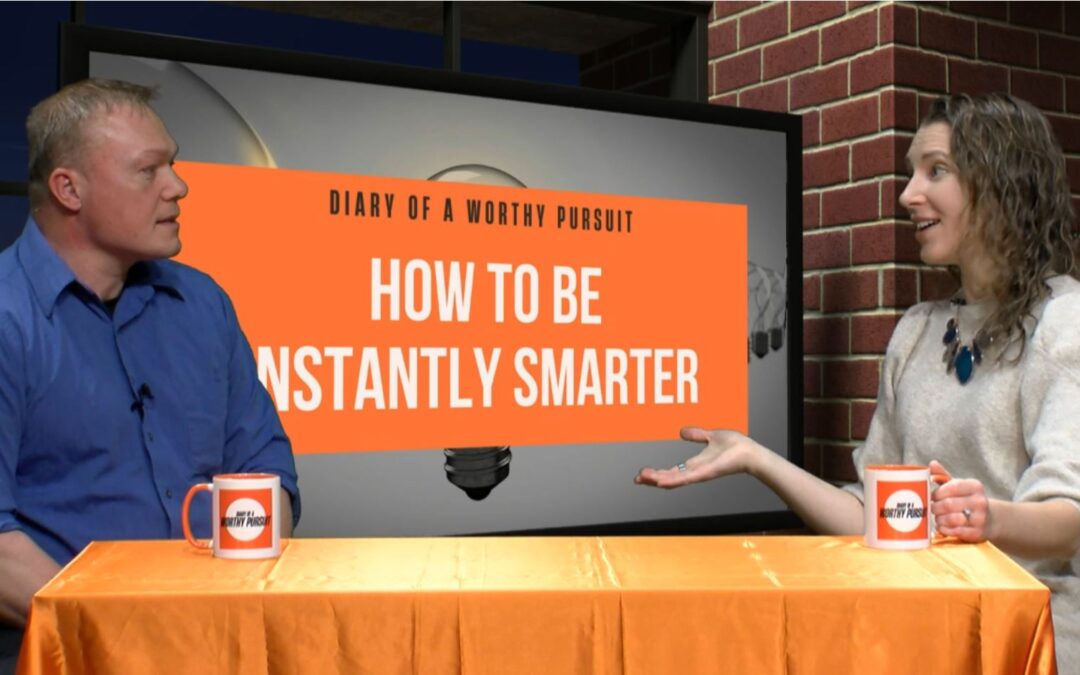


We all want to be smart, and in this episode we give you some quick and easy tidbits to make it happen. Everything from talking with friends and learning how to ask questions to putting your mindset in a place of positive intellect. Listen as Jenna and James detail for you ways to move your IQ up in less than 30 minutes.
-
How to Start a Morning Ritual
Apr 13, 2023 •
Jenna [00:00:07]: So I used to wake up in the morning in a crazy start. My kids would run in, they’d be screaming, Owen didn’t do this. Callan woke me up. Where’s my breakfast? And I roll over and it’s 06:00 luck. Awesome. Didn’t wake up before the kids, and…
-
How to Be Confident
Apr 20, 2023 •
James [00:00:06]: I’d like to tell you a story about a guy that wasn’t the most confident in the world at a moment with short cutoff jean shorts. So picture yourself let’s call it a weekend. In September, I’m in Wisconsin Dells at the Wazawa Festival, which is the end…
-
How to Reach Email Inbox Zero
May 18, 2023 •
-
How to Increase Revenue
May 11, 2023 •
-
How to Stop Procrastinating
May 4, 2023 •
Podcast Transcription:
James [00:00:06]:
So the other day in Wisconsin, it was warm, just a day. That’s what we get for summer. So I have a Jeep Wrangler. We took that out. No roof, no doors. It’s a magical, magical time. Interesting thing though is that when you go in a Jeep ride, we went for ice cream, it happened to be about 60, maybe 55 degrees outside. So my kid’s in the back, and my kid wears shorts all the time, but he’s getting a lot of breeze back there because it’s 55ish degrees, whatever, on top of a 60 mil an hour breeze. And he’s deciding that he’s cold. And I’m like, this is the one nice day a year that we get. So we’re getting the Jeep out, having a good time, he’s freezing. So interesting thing is he always likes to wear tall socks. And he starts to pull his socks over his knees to try to warm up. And I hear him say to himself, but still out loud, use your resources, Max. And for a moment there, I felt like a proud dad because my boy was smart, which is amazing when people are smart, especially when they’re around you.
Jenna [00:01:04]:
Welcome to Diary of a Worthy Pursuit.
James [00:01:07]:
How to get what you truly want in life and business.
Jenna [00:01:09]:
And today we’re going to talk about ways to be instantly smarter. I love this story. Use your resources, Max. I love it.
James [00:01:17]:
Yeah, I think he was just looking around the Jeep because I think, well, normally we have a blanket in there, but we hold him to soccer practice and so the blanket had to go because there’s not a whole lot of luggage room, right? So he just pulled the soccer socks over his knees. Use your resources.
Jenna [00:01:33]:
But I love the internal track too, right? He was problem solving for himself. He found a way to make that.
James [00:01:39]:
Happen, which is super smart.
Jenna [00:01:40]:
But there’s so many opportunities where we can get stuck in our own track, in our own head, and if we just take a minute to try to step outside of it, right, there are so many things that we can do to help improve our situation.
James [00:01:54]:
He didn’t complain, right? He didn’t say, oh my gosh, I hate this Jeep. Oh my gosh, why didn’t you bring a blanket? Why didn’t you tell me to? He wouldn’t wear pants, so why didn’t you whatever. Why didn’t you solve my problem before I even knew that I had one, right? He didn’t do any of that. He’s like, use your resources. Which instantly it’s totally right. If you step back and think, okay, how can I solve this problem?
Jenna [00:02:16]:
Right?
James [00:02:16]:
Boom. You figure it out a way.
Jenna [00:02:18]:
So I love this topic today because we’re going to talk about just little tidbits of things that you can do to instantly make yourself smarter when you hit these moments of like, gosh, I’m cold, right? That’s real life.
James [00:02:28]:
It totally is. Especially for a kid who wear shorts.
Jenna [00:02:30]:
All the time, right? Exactly.
James [00:02:32]:
So first one we have, of course, is use your resources, whether that’s tall socks or just asking yourself the question, what resources do I have? Next we have this is a fun one. Watch for presuppositions and questions.
Jenna [00:02:46]:
Yeah. This one’s so interesting because I think we see this on the negative pretty often, right? So it’s like, well, tell me why that’s not working for you? Or why can’t I do this? You’re already implying the negative piece of this, but you can flip it and use it in the positive.
James [00:03:04]:
Totally. Yeah. The whole Why is this happening to me? You’ll come up with that answer, right? I heard my kid said that, right. So I’m thinking, OOH, super awesome, smart kid. And then he asked, Why is this always happening to me? I think he’s trying to get his shoe on. And I’m like, Dude, you’ve got to ask a better question.
Jenna [00:03:18]:
Yeah.
James [00:03:18]:
How can I get this? How can I solve this?
Jenna [00:03:21]:
Whatever, right. Or Why is this happening for me? Things don’t happen to me. How is this happening for me? I think is a really great one.
James [00:03:28]:
I like it. Yeah. You also see it in headlines in the newspaper. They’ll ask a question, and the presupposition is negative.
Jenna [00:03:36]:
Yeah.
James [00:03:37]:
So is this cup terribly ugly orange or something?
Jenna [00:03:41]:
Is social media dead?
James [00:03:42]:
Yeah, there you go. Perfect. I remember a local business magazine ironically had the question, Is print dead?
Jenna [00:03:52]:
Oh, my gosh.
James [00:03:53]:
Which is funny because it was a printed magazine.
Jenna [00:03:55]:
It’s kind of a negative supposition.
James [00:03:57]:
Yeah. So just being aware and looking for those presuppositions will help you deviate from just following or answering the presupposition, saying, Wait a second.
Jenna [00:04:08]:
So how do we flip this positive, though?
James [00:04:10]:
Well, one, just being aware and knowing that when somebody asks you a question that has a presupposition, if they are intentionally doing it or not, I guess, really doesn’t come into play. But just being smart enough to listen to the question in your head a second time first and think, okay, wait a second. What are the ways that we could answer this question? And do I really need to answer this question?
Jenna [00:04:32]:
Yeah, well, I think that also comes to another tip that we have here, which is answer a question with another question.
James [00:04:38]:
Absolutely. It’s the best way. Right?
Jenna [00:04:41]:
Do you always answer a question with a question with another question? Yes.
James [00:04:45]:
Yeah. So it’s interesting. I heard a conversation recently with two salespeople, and they were just battling back and forth.
Jenna [00:04:53]:
Yeah.
James [00:04:53]:
Because in the end, it’s kind of like a tennis match. And the rule with tennis match is you score when the ball is in the other person’s court, and so you serve back or hit back, I guess it would be by asking a question. So it was question pop up. Question pop up. I don’t know if they were accomplishing anything, but it was interesting just watching that little somewhat of a volley tip.
Jenna [00:05:15]:
For tat of some kind.
James [00:05:16]:
I think after a little while, they realized it was going on and then it was a game and it was totally a game, and it was kind of entertaining to watch. And just like, what in the world is happening here?
Jenna [00:05:27]:
But what I like about this, answering a question with a question is something like, why am I so cold? Or what can I do? Can going back to that use your resources? Like, why am I so cold? Why is this always happening to me? Okay. What can I do? Answering your own question with a question, trying to turn it to a positive supposition. These things all kind of build on themselves.
James [00:05:48]:
Yeah. It also helps because you can ask if somebody does ask you a question, you can counter it with, why did you ask that? And you can make it a little nicer. Right. So I can say, hey, Jenna, what’s your favorite color? And you can say something like, well, that’s an interesting question. You must have asked that for a reason. And I’ll say, Would it surprise you if I told you that the reason I ask you that is because I’m just curious about filling a question in the show. And you can say something like, it totally doesn’t surprise me, but would it surprise you if I didn’t want to tell you my favorite color? And it’s interesting because you can have that fun dialogue and it helps when somebody asks I think we talk about this in a different show. If they don’t counter with another question, sometimes the conversation can just be dead.
Jenna [00:06:28]:
Right?
James [00:06:29]:
How’s your day? Fine.
Jenna [00:06:31]:
It’s like talking to a nine year old kid, right, trying to pull answers out of somebody. So I was at a sales training last week, and one of the things that I really liked about this was this is applicable if you’re stuck in a conversation, but also if you’re trying to pull answers out of someone so you can serve them. So if you walk into a mattress store, it’s not a situation where it’s like, I’m going to show you all of the mattresses. No, I’m going to lead with a question. I’m going to ask a question. Right. So talk to me about how you’re struggling with your sleep right now.
James [00:07:04]:
Talk to me about presupposition. Right there.
Jenna [00:07:06]:
Right, right. Yes. Struggle because it’s negative because you wouldn’t be here trying to buy a mattress.
James [00:07:11]:
I love my mattress so much. For fun, go to mattress.
Jenna [00:07:15]:
Right. But it was so interesting the questions that they asked, because then again, asking these questions made them smarter so they could deliver the right solution. And then they were not just a salesperson, they were a consultant. Now, you were interested in my needs and giving me the solution for my problem. So asking questions, I think is a really great way to make you instantly smarter to serve the person in front of you.
James [00:07:35]:
Yeah. I also like the more specific questions because they didn’t say something like, how can I help you?
Jenna [00:07:39]:
Right.
James [00:07:40]:
Because you’re going to be like, we’re just looking. And they didn’t say something like, what are you looking for? Right. Like, we’re in a mattress store. We’re pretty much looking for a mattress.
Jenna [00:07:48]:
Right.
James [00:07:49]:
Where do you keep spatulas asking a question about your sleep, which exactly? That’s great. That’s very specific, and it gives you an opportunity to answer it more intelligently.
Jenna [00:08:02]:
Well, and I think the problem, the place I see this the most often is, like, you walk into a retail store and, oh, how can I help you? Or Are you looking for anything specific today? It’s like, well, those aren’t specific enough questions for me to actually want to open up and not feel like I’m being sold to. Right, but what can you and your business find a way to ask a question and maybe you add a presupposition to it such that you’re helping them, you’re serving them. So the better question when I walk into a retail store like that is, tell me about what holes you have in your wardrobe that you’re looking to fill or what event are you going to coming up that you’re looking for an outfit for.
James [00:08:43]:
All right.
Jenna [00:08:44]:
Or things like what clothes make you feel good, things that are going to pull out of them ways that you can help serve them rather than they just can’t say, oh, no, I’m good. I’m just looking, like, biggest missed opportunity in the world.
James [00:08:58]:
Because if you ask for anything or everything, you’ll get nothing.
Jenna [00:09:01]:
Exactly.
James [00:09:01]:
We ask for specifics. It’s much easier to answer with specifics.
Jenna [00:09:05]:
Oh, I love that. If you ask for anything or everything, you get nothing.
James [00:09:08]:
Yeah, because you’re like, do you know anybody?
Jenna [00:09:12]:
I know a lot of people.
James [00:09:13]:
Do you know anybody over the age of 80 that drives a car?
Jenna [00:09:15]:
That’s very specific.
James [00:09:16]:
Yeah. Or whatever.
Jenna [00:09:17]:
I just thought of three.
James [00:09:18]:
Right. Just like that. So it’s much easier when you ask for something specifically for the person to answer and say, like, think of an object.
Jenna [00:09:26]:
What object?
James [00:09:27]:
Yeah.
Jenna [00:09:28]:
Sell me this pen.
James [00:09:29]:
Right. What do we have next here? Understand that you will achieve your standard. So this is an interesting one.
Jenna [00:09:38]:
It is.
James [00:09:39]:
I see this a lot with employees. Not necessarily good. I mean, cool, because they’re working for me, so that’s great. But where they’re at in life, what they’re driving and where they’re living, all that kind of stuff. I can see across the board, we have whatever, we got a dozen employees all making roughly the same amount of money. And you can see different people achieving different standards. So, you know, it’s not necessarily a financial thing. It’s just they’re achieving the standard that they’re willing to live with, and that may not be a conscious choice that may just be something in the back of their head.
Jenna [00:10:14]:
It might be a track that they need to break. I think it’s really important. Mind your mindset, right? It’s this idea that what’s the standard that I’ve set for myself in my brain that I feel like I can’t break. So if I have this track of my family was living paycheck to paycheck, so I will live paycheck to paycheck, I’m probably going to live that way. Right. But if I challenge that and say, hey, I’m going to break that cycle and I’m going to build generational wealth, that’s a completely different thing. I’m making decisions differently because that is my personal goal. And I think this brings up another point that we have here, is defining your own version of success, right? So what your standard is, is what you’re willing to tolerate, but then what success is to you may not be success for me.
James [00:10:58]:
Right.
Jenna [00:10:58]:
So going through that process of, well, how would I define personal success? Because I’ve seen plenty of business owners build businesses that they wanted to be $5 million businesses, but they sacrifice so much along the way.
James [00:11:11]:
Oh, incredible.
Jenna [00:11:12]:
And then you look at the people that you think are successful, and you’re like, yeah, but look at the rest of their life, right? Like, they sacrifice their family. They don’t have friends, they work all the time, their health is in the crapper. And you wonder, is that the cost of success? Doesn’t have to be.
James [00:11:26]:
No, I think it depends. A lot of times with focus, you focus on something that means other stuff is out of focus. So if you’re focusing too much or I guess I judge too much, right, but you’re focusing a lot on your business. You may sacrifice your family or your health. My dad ended up in the hospital with a bladder infection because he was focusing so much on his business and he was doing it. I mean, Admirably, right? You got to support five kids, whatever, right, doing your thing. But he ended up in the hospital for two weeks because of that. And it’s one of those, like, was.
Jenna [00:11:58]:
It worth it, right?
James [00:12:00]:
Kind of thing.
Jenna [00:12:01]:
So you have to keep your goal in mind and front of mind, right. And not just like, set it down, write it, and forget it. You got to look at it all the time. Because if I’m going to build a business that I want to serve my family so I can go have adventures with them and go do fun things, I’m going to design my business much differently than if I’m just saying I want to make $5 million.
James [00:12:21]:
Same thing goes for health. And interesting, there’s a three question test it’s what do you want? What do you have to do to get it? And are you willing to which is interesting thing because think about it with six pack ABS or whatever, right? Like, what do you want? I want six pack ABS. Right. What do I have to do to do it or what do I do to earn it?
Jenna [00:12:40]:
Right.
James [00:12:41]:
Five gazillion push up or sit ups or something like that?
Jenna [00:12:43]:
Sure.
James [00:12:44]:
Like, are you willing to maybe four.
Jenna [00:12:49]:
Pack ABS are cool, or you look at any other way, like ABS are made in the kitchen. What are you willing to not eat? I get those six totally true ABS because they’re true. That’s the presupposition. What will I not choose? Because every yes to one thing is a no to multiple other things. And I think that that’s another mindset shift for people of just to make you instantly smarter. Like, it’s okay to say no because I’m saying no to this thing means I’m saying yes to these other things. So building my business, I’m trying to build it on the back of networking. Referral marketing is a lot of because there’s a lot of trust in what I do. You’re trusting me with what you’ve been through in your health or your personal goals. So I have to build a lot of trust. So I’ve started to do that via networking.
James [00:13:33]:
Nice.
Jenna [00:13:33]:
Which is great, but there’s so many networking events out there.
James [00:13:37]:
Oh, yeah.
Jenna [00:13:38]:
I could do networking all day, every day, seven days a week, and never go to everything that I wanted. And so I have to strategically say yes, because then I’m saying no. So a boundary that I set for myself is if it’s networking after 05:00 p.m., it’s not going to happen. My family is more important.
James [00:13:54]:
All right?
Jenna [00:13:55]:
So by saying yes to that networking event after 05:00 p.m., I’m saying no to spending quality time with my kids.
James [00:14:01]:
All right?
Jenna [00:14:01]:
So my no to networking is meaning I’m saying yes to this other priority in my life. And sometimes just reframing it in that way is extremely helpful for us to be more comfortable with that decision.
James [00:14:12]:
And the standard is that you spend time with your family after five.
Jenna [00:14:15]:
And that’s my standard.
James [00:14:16]:
I know my in order to achieve that, you have to say no to this stuff. And it’s very nice or very smart to have rules like that. So it’s very easy for you when somebody comes up to you and says, hey, there’s this event going on, whatever, 530. You can be like, this is my standard. Doesn’t fit. No.
Jenna [00:14:31]:
Move on.
James [00:14:32]:
Instead of thinking or saying yes and then retracting and either not showing up ghosting or saying, funny story, something came.
Jenna [00:14:38]:
Up right at a flat tire for.
James [00:14:41]:
The rest of my life. Whatever.
Jenna [00:14:43]:
God, you need a new car, James.
James [00:14:45]:
This is the 12th one this week.
Jenna [00:14:47]:
Right?
James [00:14:49]:
The other one. Speaking of which right.
Jenna [00:14:50]:
Perfect.
James [00:14:51]:
Segue realize that there will always be a problem.
Jenna [00:14:53]:
Yes. Fair. I don’t know how many times you’re going and you think that this is the road. So example when I was on my own health journey. Three and a half years ago, after my kiddo was born, I went to see a doctor, and the doctor was like, cool, we’re going to do these tests, and then we’ll prescribe you these things, and then this is the result that we think we’re going to see. Awesome. Except we took these tests and those tests didn’t show anything. Those tests said that things were normal. Right. So here was the clear delineated path, but those tests were normal, so oh, we can’t take this next step, so let’s try this test. So we’d like, jump over here. Oh, that looks okay. So, oh, we don’t want to work with you because you’re normal. So cool. Well, that didn’t get me to my end result, so now I have to step over here and plan for this distraction. And then I ended up getting my own education because no one else would help me figure it out. So I had to change this complete lane interesting and made my own path to that destination. But what’s interesting is I think we always think that it’s a straight line from this place to where I am, to where I want to be. And the truth is, it’s like you’ve got 15 different exits and you’re circle in and you turning, and if you don’t plan for that, it’s really discouraging.
James [00:16:08]:
Yeah. Or just expect it.
Jenna [00:16:11]:
Yes.
James [00:16:11]:
Right. Because you’re going to your little doctor person, and doctor person says, oh, you’re good. You could have said, well, I guess I’m good.
Jenna [00:16:18]:
Right.
James [00:16:18]:
But you knew something’s wrong.
Jenna [00:16:22]:
Right.
James [00:16:22]:
I talked to an employee. This was years ago. I don’t remember if I told you the story before. A younger guy, he was getting married, okay. And he had some health stuff going on. And I pulled him aside because he was having a rough time just not doing his work. Back when we were in the office, and I said, you know, what’s going on? It’s like, I got this marriage and I got this health thing. Health thing will be solved in six months. Marriage will be taken care of in five months. So at the end of six months, I’ll be all good. And I asked him if he thought that he was ever going to have any other problems after this. No marriage will be taken care of. I’ll be married. Everything’s cool that way. And I’m like, totally wrong and health thing. You think that if you take care of your health, whatever in this five months, you take your pills, you go through your surgery, whatever it is you’re doing, that that is the only health problem you’re ever going to have in your entire life for the rest of your life, sooner or later, you’re going to die. So I’m like, no, dude, there are problems every single day, right? Big ones, little ones, medium sized ones, ones that really don’t matter, ones that are huge. There’s other problems that people have that are around you, your wife, girlfriend, fiance, whatever, she’s going to have problems, she’s going to share them with you, want you to help her. Problems are a sign of life. And I remember him looking at me like, nah, I’m pretty sure this will be solved in six months.
Jenna [00:17:39]:
Okay, but when you change your thinking and you expect it, then when those bumps, big or little, come up, it doesn’t derail you as quick, right? Because there is this period of shock, I think, when those problems and you’re like, oh, how do I move forward? What’s going on here? The ground’s a little shaky, but if you know that that’s going to come up, then you don’t have that pause. You’re just like, this is just part of life. I can just move beyond this. And that realization, I think, is really helpful.
James [00:18:06]:
Just figure out how you’re going to get through it. And I always joke, nobody likes to go on a flat roller coaster, so, I mean, it keeps stuff exciting at the time. Maybe you’re terrified and you’re thinking, maybe this is a little too exciting. I don’t need to get cancer or anything like that. Yeah, but it’s one of those, like, you’re able to get through life and have it not be the same thing over and over each day.
Jenna [00:18:30]:
Well, and I think another thing here is just when you get stuck, it’s, what’s the next best thing? What’s the next right thing and then the next right thing. Because sometimes it’s hard to see your destination when you’re in the middle of all of this stuff.
James [00:18:42]:
Totally.
Jenna [00:18:43]:
Like, there’s this children’s book called Going on a Bear Hunt. So they want to go find a bear, and they come to a stream, and then they come to mud, and then they come to snow, and each time it’s like, well, we can’t go over it, we can’t go under it. We must go through it.
James [00:18:58]:
All right.
Jenna [00:18:59]:
And so it’s so interesting because I think it does a really nice job of helping kids, in a way, see that like, hey, we met this obstacle, and we’re going to go through just this one thing, and then we met this obstacle, and we’re going to go through just this next thing. But that pushing through and just taking the next best step, I think, helps you when you’re like, I’ll never make it through this scary big thing, right? Yeah.
James [00:19:22]:
The interesting thing you point out, right, like, problems seem way worse at the moment than they actually are. It’s almost your anticipation of, oh, my gosh, this thing. Right?
Jenna [00:19:31]:
Right.
James [00:19:32]:
Like firing an employee or hiring an employee or something of that nature, I got to go through this. Right. But once it’s done, it’s just another good story and you move on with your life or bad story.
Jenna [00:19:45]:
Right. Fair.
James [00:19:48]:
What’s? Next year, Ask for Help was an interesting one.
Jenna [00:19:51]:
This is really interesting, and I think it’s one where we don’t like to admit that we need help. Things aren’t done in a silo, and we shouldn’t know how to do everything. One of the things that I learned last week at a conference that I really enjoyed here was there’s a book called Who, Not How. And the idea is that rather than me spending a week trying to figure out how to do something that isn’t in my desire zone, isn’t in my wheelhouse, will take me five times longer than someone who just does the thing. I should just go out and find the person who does the thing, find the who. And if I need to know a little bit about the how later, then I can learn it from that who. But look at how much time I could waste by trying to figure it out myself, rather than just finding the person to do the thing who could do it in 2 hours.
James [00:20:35]:
And you’d have to figure it out, make the mistakes yeah. And then delay your business growing because of all that.
Jenna [00:20:42]:
Yeah. There’s huge opportunity costs when you get stuck by these things of, well, I need to do it all for myself, or even worse.
James [00:20:48]:
And I run into this with my other podcast is I was trying to do the editing and the posting and all this stuff. It just wouldn’t happen. You’d end up with a backlog of podcasts and you’re like, oh, and one day you’d try to fire them all up. But it wasn’t very routine. And I’m like, I got a crew of people that I could probably train to have them do little things here and there. And then it’s just done and moves it along and moves it. Yeah. It gets done routinely. And all I have to do is, hey, did you do this? And they just have to say yes when they do that.
Jenna [00:21:22]:
Right.
James [00:21:22]:
And then it’s taken care of. I know it’s actually going to get done.
Jenna [00:21:24]:
Yeah.
James [00:21:25]:
Because the worst part is even if you don’t go through all that, make the mistakes, you’re just like, oh, that’s on my to do list.
Jenna [00:21:30]:
And it keeps getting pushed down and down because you dread it.
James [00:21:34]:
Right?
Jenna [00:21:35]:
Yeah. So I think I read an article yesterday that talked about trying to attach a why to some of these things that we push off of our list. So if it’s like, I got to break the rocks out of the lawn because we don’t have a paved driveway yet this summer, but not yet. All right, so after snowblowing all summer, we throw all these rocks oh, interesting.
James [00:21:54]:
Into the grass like that.
Jenna [00:21:55]:
So there’s tons of gravel in our grass and it’s like, that sounds awful. I’m going to sit here and rake it’s, like shoveling it’s hard, back breaking work. When I talk about the why, though, like, why do I need to do that? It’s like, well, I do that so we don’t tear up the mower blade so we don’t fling rocks when we’re mowing and the kids are playing and hurting somebody. Right. So there’s lots of reasons as to why I need to do the thing. And when I remember the why, it’s easier to just make myself do the thing.
James [00:22:23]:
All right, so why are you doing the push ups? Why are you doing the setups? Why are you going for running to achieve the standard that you have?
Jenna [00:22:30]:
Yes.
James [00:22:30]:
Why are you saving money? Why are you earning money to achieve this thing?
Jenna [00:22:35]:
And that comes back to something that you had said of asking why seven times.
James [00:22:41]:
Yeah.
Jenna [00:22:41]:
This is so interesting.
James [00:22:43]:
Yeah. I was taught to treat it like a four year old.
Jenna [00:22:46]:
Okay.
James [00:22:46]:
So if somebody says, I’m going to do this right, let’s just say I’m going to quit my job. Why are you going to quit your job?
Jenna [00:22:51]:
Why?
James [00:22:52]:
Because I don’t like it. Right. Why don’t you like it and just keep asking, like, the boss is a jerk. Why is the boss a jerk? Well, because I’m lazy and I don’t do my job or whatever it is. Or I don’t like my chair. Why don’t you like your chair? You know, it hurts my butt. Why does it hurt your butt? Because it’s old. Like, well, instead of quitting your job, you can get a new chair, I suppose.
Jenna [00:23:15]:
Yeah.
James [00:23:16]:
So a lot of times I feel like we have these issues or problems that we’re like, this is so big. We have to make this huge life choice instead of just getting a new chair or whatever it is. Something way simpler would solve the problem.
Jenna [00:23:28]:
Yeah, I love that. This reframes and you’ve probably heard me say this multiple times, but a mentor told me a few months back, why are you making that problem a boulder when it’s just a pebble? Oh, no, don’t make it so big.
James [00:23:40]:
All right.
Jenna [00:23:40]:
And so I think asking why seven times really helps you simplify the problem and get clarity on, well, this is really the thing. The world’s not ending, and I don’t need to quit my job and go be a monk in Mongolia. My issue is well, it’s because of this and then this and then this. And so I think when you can ask those questions, so much clarity to.
James [00:24:04]:
It, the challenge is then you feel like you’re kind of dumb because you realize, like, oh, this is why. This is why. And it’s challenging sometimes. First two layers of why, no problem. But 3rd, 4th, 5th, you move on. You’re like, oh, I guess it’s not that big of a deal. And you kind of have this self realization. Wait a second.
Jenna [00:24:25]:
True. But how much worse would you feel if you quit the job, did the thing, did the drastic action.
James [00:24:33]:
You sat on the same chair.
Jenna [00:24:34]:
Yeah, it’s a work from home job. I hate my work from home job. And it’s. The chair.
James [00:24:41]:
Yeah, it’s just one of those I guess that’s why we’re talking about being more intelligent here, is because once you suffer through asking these questions why? Which is way simpler than quitting your job and going through all that, you realize like, all right, but I guess the challenge that I’m pointing out is that when you are asking yourself why? And you’re realizing, like, I should have known this. I didn’t pick up on it, but the four year old me is asking, Why? Why? And the four year old me is pointing out that I’m going to drop the ball and not been aware of something that I should have been aware of.
Jenna [00:25:12]:
Well, because it’s uncomfortable. It’s uncomfortable to have those realizations. And I think that’s also why we procrastinate things, is because there’s this dissonance of making that realization, admitting to ourselves, like, this is going to stress me out, and I don’t want to be stressed out. Whatever the little thing is, right. It could be good stress, it could be bad stress. Right. Like, I want to go have the feeling of running a marathon. Cool. That’s good stress. But, oh, I don’t want to get started because I might get sore, and I might have to change what I eat, and I might have to sacrifice all these other things. Those are legitimate worries that we have to realize.
James [00:25:48]:
Yeah. Are you willing to do it to achieve the thing?
Jenna [00:25:49]:
Right. If yes, then what? No.
James [00:25:52]:
Yeah, exactly. So true. What else we got here? Do not accept not knowing and not accepting. Defining that something just works. So I’ll tell you a really quick story to allude to here. We answer phones for few companies that do auto, glass repair, replacement, stuff like that. And one of the questions that we have to ask is about their sensors, right? Lane departure, auto cruise control, all that stuff. One of them is electrochromatic mirror. It’s auto dimming mirror.
Jenna [00:26:22]:
Okay.
James [00:26:22]:
Do you have an auto dimming mirror? And I was talking with my employees because we’re trying to figure out a whole flowchart for all the call works. And I’m like, you just have to ask them if they have an auto dimming mirror. I was talking with three employees. Two of them are like, what is that? And I was like, what do you mean? What is an auto dimming mirror? It says what it is. It auto dims. And they’re like, dims. What? And I said, the headlights behind you. Oh, that’s what that’s for? Kind of thinking. I was thinking, like, you’ve been driving for almost 30 years, so what happens when a car comes behind you with really bright lights on? What do you do? They’re like, I just move my head.
Jenna [00:27:01]:
I mean, that’s one way to solve a problem.
James [00:27:02]:
Oh, my gosh. I was like, who hired you? I hired them. So anyways, it’s one of those, like, when you see something like a little knob on the bottom of your mirror. Instead of just being like, that’s a knob on the bottom of the mirror. Just play with it and say, like, it moves the mirror. Right? Just like the is that the little monkeys that were in oh, my gosh. I kind of think of Zoolander. Oh, yeah, they’re doing the thing with the computer, but that’s like Planet of Apes. Just like, learn or don’t accept not knowing.
Jenna [00:27:33]:
Right?
James [00:27:34]:
I have so many people that I talk to. I get into cars and I’ll ask them, like, hey, tell me about your car. And they’re like, I don’t know. It just goes but that means that if it ever stops going, they’re at the mercy of whoever they took it to fix it. I’m not saying that you have to know or even do the actual mechanical part, but just have some knowledge about that stuff so that, you know, hey, what you’re telling me makes sense, or what you’re telling me really doesn’t make sense at all.
Jenna [00:28:03]:
Well, and we live in a society today with all the technology where it’s really your own fault if you don’t know, right?
James [00:28:09]:
Oh, my God, you two view I.
Jenna [00:28:11]:
Don’T know how many times a day I am like, hey, Google, how long is a rainbow boa snake? Hey, Google, how is it because I get these questions from my kids. I don’t know. Let’s ask Google. Because we don’t have an excuse not to know because we have all this technology at our fingertips.
James [00:28:26]:
Is this surreal?
Jenna [00:28:27]:
It is crazy.
James [00:28:27]:
That’s surreal. You don’t even have to look up an encyclopedia or something like that, right? What else we got here? We got so many more, but let’s just narrow this down. Another one, this is a fun one, is follow the money. Anytime that I find you read a news story or something like that, and you’re like, this doesn’t make sense. Why would someone do that? And then you think, well, follow the money. Who’s making money in this? Where’s money going? And usually come up with that’s why they’re doing that? Which is kind of interesting, a little scary, a little creepy, right?
Jenna [00:28:57]:
But it helps you kind of uncover when so many people have biases, I think, to try to understand, well, why are they making those decisions that I don’t quite get? Another one related to money that I really liked that you wrote down here, was close enough is usually good enough for math. And that’s because unless you’re an accountant or your bookkeeper is really after you, you don’t have to have the scent by scent. Just make sure you understand the math enough to know what it’s telling you, and then it’s okay.
James [00:29:24]:
Yeah, we had that. Or I guess I have that. When I look at how many employees do I need? You see calls coming in you can look at broadly, because when you get in the super detailed finite decimals, it’s not helping you. And any month that deviates 10% is going to make all those numbers useless anyways.
Jenna [00:29:41]:
Well, and planning financially for 2.5 kids is really awkward. Is good, right?
James [00:29:48]:
Oh, that’s awesome. Well, this has been fun. This is Diary of a Worthy Pursuit.
Jenna [00:29:53]:
Where we help you get what you truly want in life and business. And if you enjoyed this, please share it with someone else who you think would enjoy being instantly smarter. Indeed.