

-
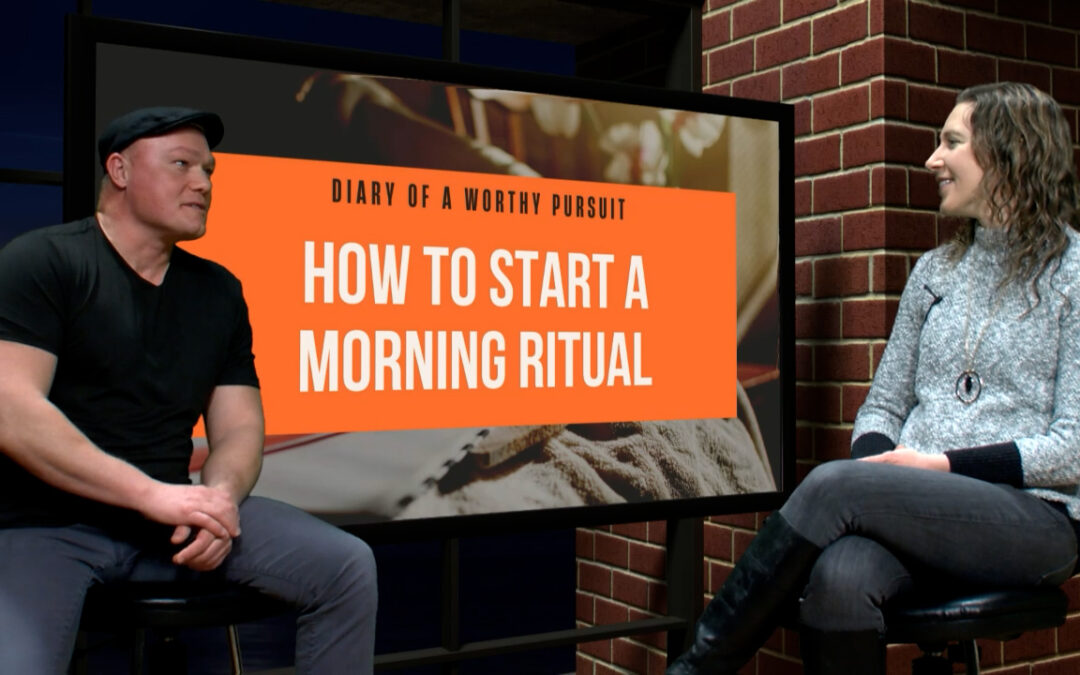
How to Start a Morning Ritual
Apr 13, 2023 •
Jenna [00:00:07]: So I used to wake up in the morning in a crazy start. My kids would run in, they’d be screaming, Owen didn’t do this. Callan woke me up. Where’s my breakfast? And I roll over and it’s 06:00 luck. Awesome. Didn’t wake up before the kids, and…
-
How to Be Confident
Apr 20, 2023 •
James [00:00:06]: I’d like to tell you a story about a guy that wasn’t the most confident in the world at a moment with short cutoff jean shorts. So picture yourself let’s call it a weekend. In September, I’m in Wisconsin Dells at the Wazawa Festival, which is the end…
-
How to Reach Email Inbox Zero
May 18, 2023 •
-
How to Increase Revenue
May 11, 2023 •
-
How to Stop Procrastinating
May 4, 2023 •
Jenna [00:00:07]:
So I used to wake up in the morning in a crazy start. My kids would run in, they’d be screaming, Owen didn’t do this. Callan woke me up. Where’s my breakfast? And I roll over and it’s 06:00 luck. Awesome. Didn’t wake up before the kids, and now I’m just going to start my day running. So I get dressed, put in my contacts if I’m lucky, or I just wear my glasses out into the kitchen where I immediately start making breakfast and getting all the things ready, shuttle the kids out the door just then to run into my day, hopefully getting a workout in. Maybe not, but feeling always so stressed and like I’m running 60 miles an hour all the time. And then I thought, gosh, is this really how this needs to go? Is this how everyone’s mornings start? And then I started to learn that, no, it didn’t have to be that way, and I had the power to change it.
James [00:01:08]:
Welcome to Diary of a Worthy Pursuit.
Jenna [00:01:11]:
Where we help you get the life and business that you truly want.
James [00:01:17]:
Today we’re tackling oh, my gosh. The morning ritual. What would you call it? Morning routine?
Jenna [00:01:22]:
I think you could call it either. All right, one ritual feels a little.
James [00:01:25]:
Bit more feel like you have to do it.
Jenna [00:01:29]:
Yeah. Routine feels like something that maybe is a little bit more relaxed.
James [00:01:34]:
That’s fair to say.
Jenna [00:01:36]:
So either way, we’re going to talk about what you can do in your morning so you can have a more centered, focused, and hopefully relaxed day than the way my days used to start.
James [00:01:46]:
Sets the tone for the day, right.
Jenna [00:01:48]:
It really does set the tone for the day. And I feel like if you start the day running at 100 miles an hour, you’re just going to crash at night and then probably start it the next day. Right. And it’s just this perpetual cycle that keeps going until you take a minute to think, oh, it doesn’t really have to be this way. I have the power to change that.
James [00:02:06]:
Fair. That’s it right there. Right.
Jenna [00:02:07]:
And it’s an ownership thing. And what I learned through trying to do all the things and being an achiever in so much of my life before this is that I would run at that pace, but I would never stop and relax because I would just go go all day and then crash at night, wake up the next morning, go go all day and crash at night.
James [00:02:30]:
Rinse, repeat.
Jenna [00:02:30]:
Yeah, exactly. So it’s really helpful to know, first of all, how to start a morning routine, because I think first it’s important to realize that we do have them, whether we like it or not, and.
James [00:02:43]:
Whether we choose it or not.
Jenna [00:02:44]:
Whether we choose it or not. Absolutely. And then, too, that we have the power to change it.
James [00:02:48]:
Fair. Yeah, totally fair. So your morning routine now is different.
Jenna [00:02:53]:
Than so much different than it used to be, but it’s all intentional. All right, so now the goal is to wake up 45 minutes to an hour before the kids come in. So I control my morning and they don’t. It makes me enter the day in just a more peaceful way. I can be more responsive and calm with my kids than just trying to chase what I need to do and what they need for me. So it’s really changed the first hour and a half of our day in my house, which is good for them and it’s good for me for the rest of the day. Because then I don’t start off on this crazy front and then feel like my whole day is hurried.
James [00:03:30]:
Feeling like you’re behind focused, exactly like I didn’t get my workout, or I didn’t get my breakfast, or didn’t get whatever it is that you would normally expect to do in a sequence.
Jenna [00:03:38]:
And then that stress just carries you through the whole day. And that never feels good.
James [00:03:42]:
No.
Jenna [00:03:42]:
And it’s not good for your body either to be in that stress state all day.
James [00:03:47]:
So when did you realize that, hey, we got to change this. I got to change this.
Jenna [00:03:53]:
Yeah. So I’d say it was after the birth of my second kiddo, who’s now three. I was trying to train for a half marathon at the time. That was one of the things that kind of kick started me as I realized my husband was home in the morning, and that was the only time that I would really have help with the kids. So I thought, if I’m going to get a workout in, I got to do it before he leaves and probably before the kids wake up. So I would wake up at five and then get my run in, do all the things. And it was summertime, so it was easier to run in the morning outside.
James [00:04:22]:
Oh, nice. Because it wasn’t darkest.
Jenna [00:04:24]:
Yeah.
James [00:04:25]:
Up until 09:00 in the morning.
Jenna [00:04:27]:
So I was able to do that and get up, and that really pushed me because then you had some endorphins going from your workout. It was a really good way to start the rest of my day, so that’s where I start. It was really with a workout.
James [00:04:37]:
All right.
Jenna [00:04:37]:
And then I evolved it from there based on what worked for me. I tried a lot of things, but I think ultimately you got to try and experiment and see what works for you, and then you can keep what you like and get rid of what you don’t. Do you have a morning routine?
James [00:04:52]:
Oh, yeah.
Jenna [00:04:53]:
And how long have you been on this one?
James [00:04:55]:
Oh, my gosh. I would say, well, almost forever. So I’ll tell you a really quick story that started the routine. I’m a sophomore in high school.
Jenna [00:05:07]:
Okay.
James [00:05:08]:
My sister one of my sisters is a year younger than I am, so she’s a freshman in high school, and she would hit the gym because she threw shot put and she had a crush on some guy that was a wrestler. So he was in the gym. Want to hang out with the person that she wants to whatever. So she’s a very strong person, physically and mentally. And so we were wrestling around and she pinned me. So I’m like, sophomore in high school. The older brother got pinned by the younger sister. The next day I went to Kmart and about a weight bench, and I’ve never stopped lifting weights.
Jenna [00:05:44]:
What a cool story, though.
James [00:05:46]:
Well, kind of. I mean, embarrassing.
Jenna [00:05:48]:
Not that you’re trying to pin me, your sister, these days, but did you ever try that again to see if, like, the weightlifting was really she just.
James [00:05:54]:
Knows, no, it’s not worth it’s not worth the fight. Yeah, but it was that moment where it’s kind of a trigger, right? Everybody’s got their little triggers for whatever. And this is one of those things where this can’t happen. This can’t it’s just not unacceptable.
Jenna [00:06:10]:
James ego started screaming.
James [00:06:12]:
Well, ego and pride. And you just think, like, logistically, that’s terrible. And my sister wasn’t exactly quiet about saying that she pinned me.
Jenna [00:06:21]:
Oh, great. Which doesn’t help either in high school.
James [00:06:23]:
Yeah. I don’t want to say my credit, but she’s built to be able to move things, right? She’s a strong woman and a shopwood’s pretty heavy.
Jenna [00:06:37]:
Yeah.
James [00:06:38]:
There’s a picture of her throwing it where you can see her tricep. She was strong. Anyways, I guess I don’t want to discount the fact that she pinned me, but it was one of those, like, I wasn’t wrestling some 80 pound just stick. It was yeah, but anyways, totally ego thing. I’m just like, Never again, never again. And you start lifting weights and then you find out the routine, oh, my gosh, if I go a day without lifting weights, I am angry. Just angry.
Jenna [00:07:08]:
And it’s so much more than the things that you’re actually doing. It’s the mental space that you get yourself in to attack the rest of your day. Because I completely agree. We’ve talked about before that running is kind of meditative for you. It’s totally one time where you can disconnect, you can focus on anything else. And that’s really helpful because then you start your day in the way that you want to, centered and calm and whatever, not running in a direction that you didn’t choose. I think that’s the other part of this, right, is that it’s being intentional about what we do in the morning because we can control our state of mind if we are thinking about how we want to do it.
James [00:07:46]:
Yeah. So it’s interesting that you say that, because you’re going to be in a state of mind, right? There’s no such thing as not being in a state. So having control over that consciously, it just opens up a whole new world.
Jenna [00:07:59]:
It really doesn’t it just changes how you go about your day in a completely different way. So you saying that you’re angry if you don’t lift or get your workout.
James [00:08:07]:
In or whatever, you have to move something?
Jenna [00:08:09]:
Yeah, I don’t have energy if I don’t get it in in the morning. But whatever it is, if you’re a workout person, you’re not a workout person, it doesn’t matter. It’s just that idea that doing something for yourself before you attack the day and do stuff, maybe for everybody else, and you don’t get another chance to do something for yourself.
James [00:08:27]:
Yeah. It sets up a sequence. I guess my morning ritual evolved because I used to get up at four in the morning and I would check email, because email during the day, I would reply. And my goal is always to get to inbox zero. Right.
Jenna [00:08:43]:
Love it.
James [00:08:44]:
But the interesting thing is, as soon as you send an email at three in the afternoon, you get emails back faster than you can reply.
Jenna [00:08:51]:
Yeah.
James [00:08:52]:
And so I’m like, well, I’m treading water at best. So when you reply at four in the morning or you reply and schedule the reply.
Jenna [00:09:00]:
Sure.
James [00:09:00]:
So you type it out at four in the morning, schedule the reply, you can get to Inbox Zero a lot easier.
Jenna [00:09:06]:
And that feels good.
James [00:09:07]:
Oh, my God.
Jenna [00:09:08]:
Yeah.
James [00:09:08]:
Inbox Zero is so life changing. So life changing because otherwise you feel like you have this burden. I’ll see other people’s inbox or they have 15,000 emails, I can’t do that, or whatever that number is. It doesn’t matter if it’s anything more than 20. You have a problem and not like mentally problem, just like you have a lot on your shoulders thinking, I got to take care of all these emails. When am I going to find the time? Every time you check your phone, it’s another thing, blah, blah, blah.
Jenna [00:09:36]:
Well, it’s that weight of someone else needing something from you and you want to deliver it, but you want to get to the other stuff that you need to do during the day too.
James [00:09:44]:
Right.
Jenna [00:09:45]:
There’s so many more routines that you can instill in your life than just a morning routine. But I think that the morning routine is a perfect place to start if you don’t have this in your life, because it just sets you up to see how much benefit you can get from making simple little changes. And then once you experience that, you think, well, where else can I put this in my life?
James [00:10:04]:
You raised a great point about experimenting. So it’s not just, this is what you have to do, because we said, whatever you do, it saying, just find the thing that works for you, and in doing so, find the things that don’t work for you.
Jenna [00:10:15]:
Absolutely.
James [00:10:15]:
I learned four in the morning. That’s a little too early. That’s a little too early.
Jenna [00:10:20]:
But I’m still in like, deep sleep at four in the morning?
James [00:10:23]:
Well, it’s one of those like in order to wake up at four, you have to go to bed. I was trying to get arnold Schwarzenegger had this little video and he’s like, sleep faster. So I’m like, all right. Right, okay. That was the thing where I’m just like, well, Schwarzenegger said it, it must be gospel, so sleep faster. And I just couldn’t do I was trying to run on 6 hours of sleep.
Jenna [00:10:46]:
That’s tough.
James [00:10:47]:
And I did it for a while, maybe a year and a half, something like that. It was a while, but you just feel, I don’t know, like, in the morning you’re cool. And then I found that I would drain faster. Then I’m like, okay, six and a half hours of sleep. And then I do now. I set my alarm for 7 hours of sleep and I find that I’m actually getting up before the alarm goes off.
Jenna [00:11:09]:
That’s such a nice feeling.
James [00:11:11]:
But I also learned with kids that kids can interrupt your pattern. I get a kid. My son is nine years old now. So when I had my routine but we have a kid. Kid doesn’t know your routine or you really care.
Jenna [00:11:27]:
Fair point.
James [00:11:28]:
He was not a great sleeper up until three or four years ago. Okay, so then like my scheduled six, 7 hours of sleep, whatever, when it’s interrupted. Oh my gosh.
Jenna [00:11:39]:
Yeah.
James [00:11:40]:
You can’t get enough sleep.
Jenna [00:11:41]:
No.
James [00:11:41]:
So the joke was, I totally understand why people are jerks. It’s not right.
Jenna [00:11:46]:
Fair.
James [00:11:46]:
But like, they’re running on fumes, right? Fumes. I’m like, why is everybody addicted to coffee? Well, because they tried to sleep, but their kids kept waking up or whatever, so it just wasn’t good sleep.
Jenna [00:11:58]:
We don’t need stickers on our heads or anything like that because I feel you can just see like, exhausted parent. Actually, I think that there’s an ice cream flavor now called exhausted.
James [00:12:07]:
Is there really?
Jenna [00:12:07]:
And it has a little bit of some alcohol taste in it, a little bit of cappuccino or something in it. Yeah, it’s very clever. But what I love about that is that you experiment and you found what worked for you. And I think ultimately that that’s what all of us need to try to aspire to. So today we have for you four steps to help you instill a morning routine. And then you can figure out what’s going to work for you within those steps.
James [00:12:32]:
The first one we have is identify what you already do. This relates, of course, to when you get on an airplane. There’s two things you got to know, right? Where you’re starting from and where are you going. So in the case of morning ritual, you already have a morning ritual, whether you know it or not.
Jenna [00:12:47]:
Exactly.
James [00:12:47]:
Hit the alarm, hate your life, and then whatever happens after that, I imagine.
Jenna [00:12:52]:
Well, hit snooze five times. That’s a ritual whether you like it or not. Wake up to the kids screaming in the morning. That’s a ritual, whether you like it or not.
James [00:13:00]:
Right.
Jenna [00:13:00]:
So we’re all already doing something, so why don’t we be a little bit more intentional about what we are doing? So maybe it’s just taking out a piece of paper and writing down what you’re already doing. So hopefully we’re doing things like waking up, probably going to the bathroom, brushing our teeth, making breakfast, drinking some water, but probably not all in that order. Maybe it’s not the same every morning. Maybe you look at instagram for a half hour before you ever get out of bed, and we’ll, I’m sure, talk another day about why that’s not a good way to start your day. But you already have a morning routine, so it’s really trying to lay it out and get the lay of the land. Because if you don’t know where you are, you can’t decide where you’re going.
James [00:13:43]:
Right. I like to look at where I have to be in the morning, so I have to be at my office or I have to be at a coffee meeting or wherever I have to be. Right. Recording. Something like that.
Jenna [00:13:54]:
Exactly.
James [00:13:55]:
So, okay, if I have to be there at this time, and I know that this is the list of things that have to be done before that time, like shower, brush teeth, whatever, lift weights, run, take care of the dog, whatever. I know how long each of those things take. There’s gray area in some of those. Right. How long do you get to lift? How much time do you give to the dog? Whatever.
Jenna [00:14:16]:
Right.
James [00:14:17]:
And so I work backwards to figure out where is everything going to fit.
Jenna [00:14:21]:
Yeah, that’s really helpful, but also you mentioned things that some of us probably aren’t even thinking about as part of our morning routine. Right. I have a dog at home. He has to be fed, he has to be walked. We have to make sure he gets outside before anyone leaves for the day. But those are the little things that we don’t necessarily account for.
James [00:14:38]:
Right.
Jenna [00:14:38]:
So what’s helpful is, before you leave the house in the morning, just write down, what did I really just do? Or be intentional about thinking through what you’re doing every morning so you can get that starting point that doesn’t have to be where you end, but it’s a starting point. Right. Because in a perfect world, I’d love to spend a half hour walking the dog every morning, but if I got to be somewhere at 730 in the morning, that’s probably not going to happen.
James [00:15:01]:
Not happening.
Jenna [00:15:02]:
Right. Sorry, buddy. You’re going to hang out in the kennel outside for a while. Good for you. But I love that idea of thinking through what needs to get done, and then you can start making a list of what would be nice to add. So that takes us to step number two and you’ve probably heard of the acronym Kiss. Keep it simple, silly, but we’re going to use it in a different way. And with this, you can look first at your list of what you already have and then start making a list of what you want to keep, improve, start and stop. How was this helpful for you? Or how did you, I guess, incorporate this when you were working on your morning routine?
James [00:15:44]:
So when I started with the whole weightlifting thing, I didn’t use the word routine. I figured you just lift weights. And back then it was high school into college, whatever. So when I realized I want to say it was Tony Robbins thing. Tony Robbins has this priming thing, which that, I guess evolved into getting me into meditation.
Jenna [00:16:07]:
Why don’t you explain what priming means? Just so everyone has that.
James [00:16:11]:
So in that context, he does something. It’s essentially guided meditation.
Jenna [00:16:14]:
Okay.
James [00:16:14]:
So he splits up a ten minute chunk of time into three sections.
Jenna [00:16:19]:
Okay.
James [00:16:21]:
I don’t even remember what they are now because I used to do it every day. And then that evolved into different meditation.
Jenna [00:16:27]:
But it was a form of guided meditation.
James [00:16:28]:
Form of guided yeah. I still cannot just sit there and stare into space. Breathe. I tried. Oh, my gosh, I tried.
Jenna [00:16:37]:
Didn’t work for you. Experiment.
James [00:16:38]:
No, I either fall asleep or get bored. I don’t know. So anyways, I found a few YouTube channels that just have guided meditations hovering around the ten minute mark. I have some favorites, and so I figured out, like, okay, meditation is good. I like that. Ten minutes, I feel, is what I can I want to use the word tolerate, accept. I don’t utilize sure. Anything more than that. And I feel like I get antsy.
Jenna [00:17:08]:
Sure.
James [00:17:09]:
Which is probably not the right thing to do in meditation, but ten minutes also, to me, with the meditation thing, specifically, it feels like a gift. It’s a gift that I’m giving myself. You get ten minutes to just chill. And it’s interesting if there’s ever a time when you go out with some buddies at night or something like that, where your whole morning routine has shifted an hour, now you got people I got my wife and kid upstairs making noise because they’re getting up. And it’s very different than meditating when everybody else is asleep and the world is quiet.
Jenna [00:17:40]:
It is.
James [00:17:41]:
So I do everything that I can to get that meditation. Knock that thing out when no one else is interrupting you or even they’re not even interrupting. You can hear them. I like to get my meditation going. I have a basement gym set up. We have a gas water heater, and if somebody starts taking a shower, that gas water heater kicks on, and they have an exhaust fan that I swear to God, is 150 decibels. But so if you meditate in and then you hear this starting up. So I’m like, okay, I got to beat the water heater. I know when the water heater is going to come on because they’re going to be taking showers. I have to beat that. So the water heater sets the tone or sets my schedule for the meditation thing.
Jenna [00:18:26]:
Yeah, that’s interesting. The two things that I love about what you just said first is that my morning ritual is a gift or my guided meditation is a gift. And that’s so true because when we shift our perspective from off, the morning is just this thing we have to get through to get to the rest of our day, to, oh, this is a gift I can give myself so I can enter my day in a more centered and calm way. So helpful, because then you look at the whole experience of optimizing this with just a different set of eyes. So I love that. The second piece, though, that I like. What you said was it was a challenge. I have to beat the water heater, which is so interesting because I think so many of us get discouraged when we start to try something new, and then we do it for one day, and then we’re off for three days and forget, and then we try to start back up again and we do it for two. Or maybe I only have five minutes that I can spend on meditation today, so I’m just not going to do it right. And we skip. So this idea of challenging yourself to continue, but also with weightlifting, just because you can’t bench I don’t know what you’re benching these days, James, but just because you can’t bench 500 or whatever it is never enough, right? Doesn’t mean you ever stop. It just means, oh, I didn’t get it today, I’ll try it again tomorrow. And a morning routine should be looked at in that same way.
James [00:19:41]:
Yeah, it’s a get to instead of a have to.
Jenna [00:19:44]:
Exactly. So the keep Improve, start stop framework can really help you think through how you want to adjust what you already have. So when I was adjusting mine from just running, then I started noticing, I started to get more into meditation and thinking. I initially started it for my kids because I found that I was that parent that would get so frustrated, and I couldn’t parent in a calm way. I always felt like I was reacting. It was building up. So I started meditation for that. And then clearly the health benefits came through and were helping me on my health journey, too. But then it was scheduling, okay, I want to start adding ten minutes. And I did the same thing. I find YouTube channels. I’ve tried a bunch of different meditation apps and things like that, but the YouTube channels I love because I can switch back and forth and that sort of thing. So I started that. I stopped picking up my phone first thing in the morning that’s a huge move. It was a huge move. And so hard, I started charging my phone outside the bedroom.
James [00:20:48]:
Interesting.
Jenna [00:20:49]:
The notifications would go off and all those sorts of things. So it was just too distracting. I couldn’t go to sleep. And then when I woke up, it was just way too tempting for me to pick up and look at my email and just get on that rabbit hole. Yeah. And then be stuck there for 45 minutes and then have lost that time. So I do it differently. Now, I evolved where I keep my phone by my bed, but it’s because I use it as a white noise machine.
James [00:21:12]:
Oh, interesting.
Jenna [00:21:12]:
And I just turn it on airplane mode so I don’t get any of the notifications. The WiFi is off all smart things. So that’s kind of a start. And stop for me is how that evolved or evolved the keep. I kept my morning workout, but I’ve cut it because I would love to get in a half hour or 45 minutes and consider that my workout for the day. And I just don’t have enough time in my morning to get that in. So now for me, my keep is just a shortened workout where it’s I’m going to do a little bit of yoga just to stretch and move my body, or I’m going to do some push ups or an aberutine or something to get the blood flowing. But I’m going to do my full workout after the kids leave the house.
James [00:21:51]:
Oh, nice.
Jenna [00:21:52]:
Yeah.
James [00:21:52]:
Okay. Very.
Jenna [00:21:54]:
Anything else that you’ve improved, started, or stopped in yours?
James [00:21:59]:
I’m trying to think. The thing that I realize is you want to do all this stuff, right? Everything’s going to be magical.
Jenna [00:22:05]:
Right.
James [00:22:05]:
But the thing that has to move is when you wake up.
Jenna [00:22:09]:
Yes.
James [00:22:09]:
So that’s the challenge. Like, initially you’re like, hey, I can get up 20 minutes early. Not big, no big deal. But then 20 minutes turns into an hour, turns into hour and a half. Pretty soon you’re setting your alarm. There’s a time I set my alarm for 350 and I got up and my first thought was, this is dumb, this is dumb. And it was one of those where I think the kid woke up a little bit, so when I went to bed was fine, 350 should be just perfect, great, no problem. But the night’s sleep was not that great.
Jenna [00:22:42]:
Yeah.
James [00:22:43]:
And so everything was just like the worst thing that I could do in my point of view was hit snooze. That’s the worst thing. So that’s an evil button that I used to use. My wife used to get so mad at me because I’d hit that thing six times and she’s like, just set your alarm later for when you’re actually what are you doing?
Jenna [00:23:00]:
Right?
James [00:23:00]:
And back then, to me, hitting Snooze was a gift. I want another gift. Nine more minutes. Nine more minutes. Six times. In a row. And she was right. Right. Like that’s dumb because you’re getting terrible sleep.
Jenna [00:23:15]:
Well, people now say too that it’s like breaking a promise to yourself if you’re being intentional. Intentional? All right, so if you made a promise that you’re going to wake up at 350, maybe you were being a little unrealistic, but still you made a promise you were going to wake up. So hitting snooze can be that way. But I’m the same way I used to do it. By the way, whoever came up with a nine minute snooze button, I don’t know. It’s such a shit.
James [00:23:35]:
About an hour and a half, right?
Jenna [00:23:38]:
We’d all change our morning routine with that.
James [00:23:40]:
Yeah, right.
Jenna [00:23:41]:
But you lead into what our next step is for instilling a morning ritual, and that is set yourself up for success the night before. So it really helps if you lay out what you’re doing and how much time that’s taking, and then work backwards. Here’s how much time I need. And you set it right. Start with 20 minutes, then extend it to 30 minutes, then extend it to 45, or whatever you can do. But you need to do that math. So if I want to wake up at five and I want 8 hours of sleep, I really should be asleep by 09:00. Which is something that if I told myself ten years ago, you’re going to be in bed by 09:00, I would have thought I was so lame.
James [00:24:19]:
You and every second grader.
Jenna [00:24:20]:
Right?
James [00:24:22]:
But that’s where it is. I mean, the difference between going to bed late and whatever it is you’re doing late, good or bad. Usually. It’s not like I’m advancing my future ten at night or something like that, right? You’re watching? Dopey TV or something. Whatever. So I found that it was better to go to bed early and wake up early than it was to enjoy whatever I was doing at night late and then wake up whenever twelve snoozes after the alarm went off. Your day is a mess. And just like, I don’t know, I found myself progressing in life better when I was more regimented. How does that go? The pain of discipline is less than the pain of regret.
Jenna [00:25:05]:
Oh, I like that. I don’t know if I’ve heard that one before, but it’s also that I was just reading an article about how to raise boys.
James [00:25:14]:
They have instructions.
Jenna [00:25:15]:
Now, I don’t know if it’s instructions, but it’s mom saying, here are the things that you want to do for your teenage kids. Anyway, one of the things was talking about delayed gratification. This idea that even I’m not going to get what I want right now, but this is going to help me get to where I want to be. And that’s helpful and I think that is even hard for adults. Totally. We just want what’s going to make us feel good in this really stressful world.
James [00:25:39]:
Social media. Is doing so well, right.
Jenna [00:25:41]:
But going to bed at 09:00 or even trying to be in bed by 845, so I’m asleep by nine. Same thing has really helped me improve my morning. So how do you do that? So when I was first changing my routine, I set an alarm on my phone, which is a great tool. You use your phone for so many other things. So at 830, I would get a silent alarm prompted, saying, start your bedtime routine.
James [00:26:02]:
Oh, you set an alarm for the night?
Jenna [00:26:04]:
Set an alarm so it would tell me when I needed to start. Because then once you get used to this ritual thing, you can build so many rituals into your life.
James [00:26:11]:
Totally.
Jenna [00:26:11]:
You already have a bedtime ritual. We won’t go there today, but so I thought, you know, I want 15 minutes to get ready for bed in a peaceful way, and then I want to lay down and be able to read and fall asleep, or if I’m having trouble falling asleep, do a meditation, something like that. So I wanted to start at 830 so I could be asleep by nine.
James [00:26:27]:
All right.
Jenna [00:26:27]:
Because if I said, oh, I’m going to bed at 09:00, I got to do all those things, I’m never going to be asleep until 930, so eat into my time. So finding some way to get yourself to the bedroom to fall asleep is really helpful.
James [00:26:43]:
That is so interesting. That’s a smart move. I guess I have my night ritual, which is to prepare, for the most part, my morning ritual, like putting together a smoothie, whatever, all that kind of stuff. Mainly because I didn’t want you don’t want the blender. Like, hey, guys, four in the morning.
Jenna [00:26:59]:
You’re such a thoughtful parent. My kids just say mom, that’s loud.
James [00:27:04]:
It’s also one of those that four in the morning. At least my brain is not firing on all cylinders, so it’s very easy to open the fridge, grab your smoothie, then just to be like, what goes in a smoothie fair is the cap on things like that. Whatever.
Jenna [00:27:20]:
That has happened to you before, hasn’t it?
James [00:27:22]:
It has. Cap on tight, whatever. Just setting up the night before. And if there’s stuff that I need to bring to work or something like that, I set that. Like, here’s the pile of stuff that you have to remember to bring.
Jenna [00:27:35]:
Yeah.
James [00:27:36]:
Because otherwise in the morning when you’re bustling through, you’re going through your list, that stuff, if it deviates from that habit, not going to remember it well.
Jenna [00:27:46]:
Or I find myself staying awake thinking through those things, and like I’m trying to fall asleep and it’s like, oh, you need to do this, or oh, don’t forget to do this. So I almost need to keep it. She could be able to bed where if I just prepared better, I would feel better the next day.
James [00:28:01]:
Fair. Yeah.
Jenna [00:28:02]:
So start the night before and prepare yourself for success. And our fourth step is just talking about how to add a habit in general. So how do we instill habits? James, what did you do when you were trying to add new things in your life? Have you thought through that process?
James [00:28:17]:
So what I do, it doesn’t necessarily have to do with the thing that I’m doing. It’s why am I doing it?
Jenna [00:28:24]:
Interesting.
James [00:28:25]:
So in case of lifting weights, it’s let my sister can’t pin me ever again. Right? Like that thing that was the trigger was enough for me to just I don’t have to think about it, just do it. So for me, when I want to change a habit, if I find a strong enough trigger as to why I’m doing that, then it’s easy.
Jenna [00:28:42]:
Absolutely. Yeah. So the why is extremely important, but I love what you said about the trigger. So there’s this thing called the habit loop, which is an activation or a trigger. And then once we see that thing, then we have a response, and then with that, we get a reward. So for me, my best example is like two or three in the afternoon, I was working downtown in an office building, and I would hit this slump. I would never have any energy. So the activation was it’s two or three in the afternoon. I don’t have any energy. So my response was, let me grab a dollar for my purse and I’m going to go down and get some of those cookies out of the vending machine and give myself a sugar high. And then the reward was the sugar high. So then I felt better, right? So then, because I felt better, I would continue to do this in a loop. And that’s the habit loop.
James [00:29:28]:
All right?
Jenna [00:29:28]:
So if we want to break a habit like that, we have to recognize what the trigger is. So for me, it was having an energy slump. So if I wanted to replace that bag of cookies with something better, I would have to recognize the trigger and then replace the response. So that’s one way that you can change a habit. So maybe for you, it’s at night, not making your bedtime, and it’s that I’m going to hit Netflix or that moment in your head where it’s just one more show. And so if the response is typically, I’m going to watch one more, then you need to change that response to, oh, I should go to bed. So it’s this mental observation of your own behavior, which is kind of hard because you kind of kind of step above yourself to watch your action, right? But once you recognize this loop, you’ll see it everywhere in your life. Everything is a trigger. You get in the car, you put your foot on the brake, and you start the car. That’s a trigger, a response, and a reward. The car starts. Exactly what I wanted to do.
James [00:30:27]:
I like to think also of my gravestone. I don’t want to be in my deathbed and think, if only I’d watch.
Jenna [00:30:34]:
More Netflix Fair, that’s a good why? Absolutely.
James [00:30:40]:
So it’s easy then. Or I don’t want to say easy. It’s simple. Simple then. It’s just having the mental strength to actually make it happen.
Jenna [00:30:48]:
Yeah.
James [00:30:48]:
Nothing to it, right?
Jenna [00:30:50]:
Right. Darius so one more way you can change a habit is by thinking about habit stacking. So your morning routine starts with waking up. That’s a trigger that we can look at. And maybe when you wake up right away, the first thing you do is you go to the bathroom. So habit stacking is this idea that you can tag on something to something you already do. So maybe it’s if I want to drink more water, maybe it’s every time I go to the bathroom, I’m going to drink an eight ounce glass of water to replenish my body. Or maybe if you’re starting a morning routine, it’s every morning when I wake up and I hear the alarm go off rather than getting out of bed. I’m going to turn on my meditation if I want to add meditation.
James [00:31:29]:
Oh, there you go.
Jenna [00:31:30]:
So, using habit stacking, you can add small, little things to your routine without trying to completely change it and struggle with this whole new morning.
James [00:31:42]:
It’s just little changes. Incremental changes here and there. Incremental. Yeah.
Jenna [00:31:45]:
And that’s how we have more success.
James [00:31:47]:
Right.
Jenna [00:31:47]:
Get consistent in one little change and then add on something new.
James [00:31:50]:
One step at a time. Build upon your success. I love it.
Jenna [00:31:52]:
Right?
James [00:31:53]:
Cool. This is diary of a worthy pursuit, right?
Jenna [00:31:56]:
This is Diary of a Worthy Pursuit, where we help you live and get what you want in your business and a life you.